What is the Maneki-neko and where did it originate?
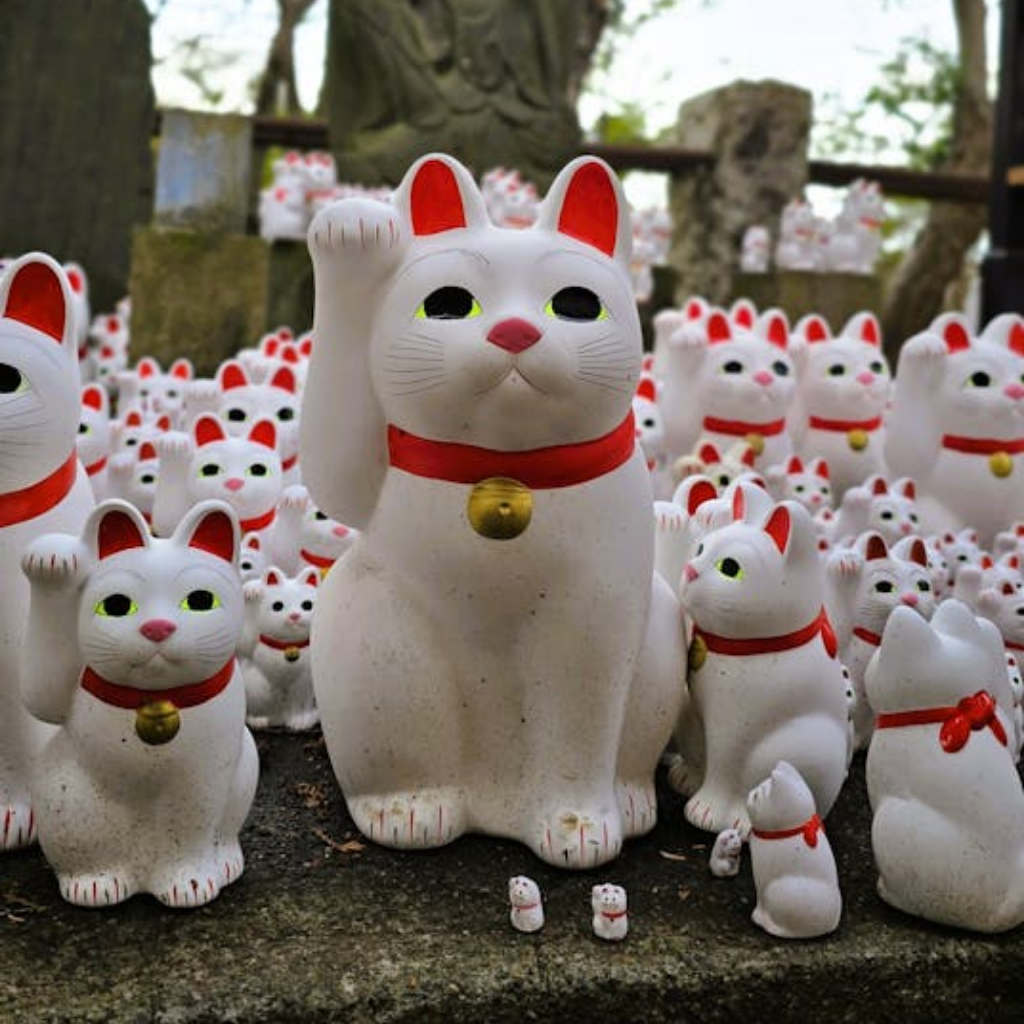
The Maneki-neko is a popular Japanese figurine believed to bring good luck and fortune. The term Maneki-neko (beckoning cat) refers to its typical pose with one paw raised, as if beckoning. It is said to have originated from Japan during the Edo period, specifically in the 17th century. The tradition was likely born at the Gotokuji Temple in Setagaya, Tokyo, where legend holds that a cat saved a wandering traveler by beckoning him into the temple, thus sparing him from a sudden storm.
A fascinating aspect of the Maneki-neko is the regional variations. In some parts of Japan, the left paw raised is believed to attract customers, making it more common in businesses, while the right paw is associated with good fortune and prosperity for the home. In many Asian cultures, the lucky cat is often adorned with a bib, collar, and a bell, each with its own symbolism rooted deep in Japanese tradition.
How can you experience the charm of Maneki-neko in Japan?
Experiencing the charm of the Maneki-neko in Japan involves visiting places rich in the history and symbolism of these figures. One must-visit is the Gotokuji Temple in Tokyo, where thousands of ceramic cats line the temple grounds, creating a serene yet surreal scene. The temple is a tranquil spot, imbued with the story of the lucky cat that started it all. Another significant place is the Imado Shrine, also in Tokyo, famous for its association with the Maneki-neko and love rituals.
If visiting during the right seasons, such as the Tokyo Art Night in April, you’ll find exhibitions and installations celebrating the art and culture around these iconic figures. To dive deeper into the commercial aspect, pay a visit to the numerous shops in Tokyo’s souvenir districts like Asakusa and Kappabashi that specialize in Maneki-neko figurines in various styles.
Explore the Maneki-neko on our boutique : nipponboutique.fr
What is the deeper cultural meaning of the Maneki-neko in Japan?
The deeper cultural meaning of the Maneki-neko extends beyond mere superstition. It speaks volumes about Japanese values such as hospitality, prosperity, and the welcoming nature of the culture. The gesture of the upraised paw is also tied to Japan’s emphasis on harmony and inviting positivity into one’s environment. This symbolism is why you’ll often find these figurines in businesses and homes across Japan.
Moreover, the Maneki-neko reflects Japan’s historical trade practices and its openness to adopting and adapting foreign elements into their culture. The cat, a creature of warmth and companionship, represents a universal symbol adopted into the unique fabric of Japanese cultural life.
What are practical tips for purchasing Maneki-neko?
When purchasing a Maneki-neko, consider the different colors, as each has its own meaning. A white Maneki-neko symbolizes purity and happiness, a gold one wealth and prosperity, while a black Maneki-neko offers protection from evil spirits. Determine the purpose of your purchase to choose the appropriate color.
For authentic figurines, shop in traditional markets like the Nakamise Shopping Street in Asakusa or visit specialty stores in neighborhood districts like Yanaka Ginza, known for its retro and artisanal shops. Be cautious of overpriced pieces in overly touristy areas and always inquire about the history or cultural significance behind each piece, which adds to its value.
Frequently Asked Questions About Maneki-neko
What does the raised paw on a Maneki-neko mean?
The raised paw on a Maneki-neko signifies good luck and fortune. The left paw is associated with attracting customers and business clients, whereas the right paw typically beckons prosperity and success.
Why are there different colors of Maneki-neko?
Each color of the Maneki-neko has a specific meaning. For example, a white cat is for happiness, black offers protection, and gold symbolizes wealth. Selecting a color aligns the figurine with your personal wishes or business goals.
Where is the best place to display a Maneki-neko?
A Maneki-neko is best displayed at the entrance of a business or home. This positioning symbolizes inviting prosperity and positive energies into your space, aligning with its role as a talisman for good luck.