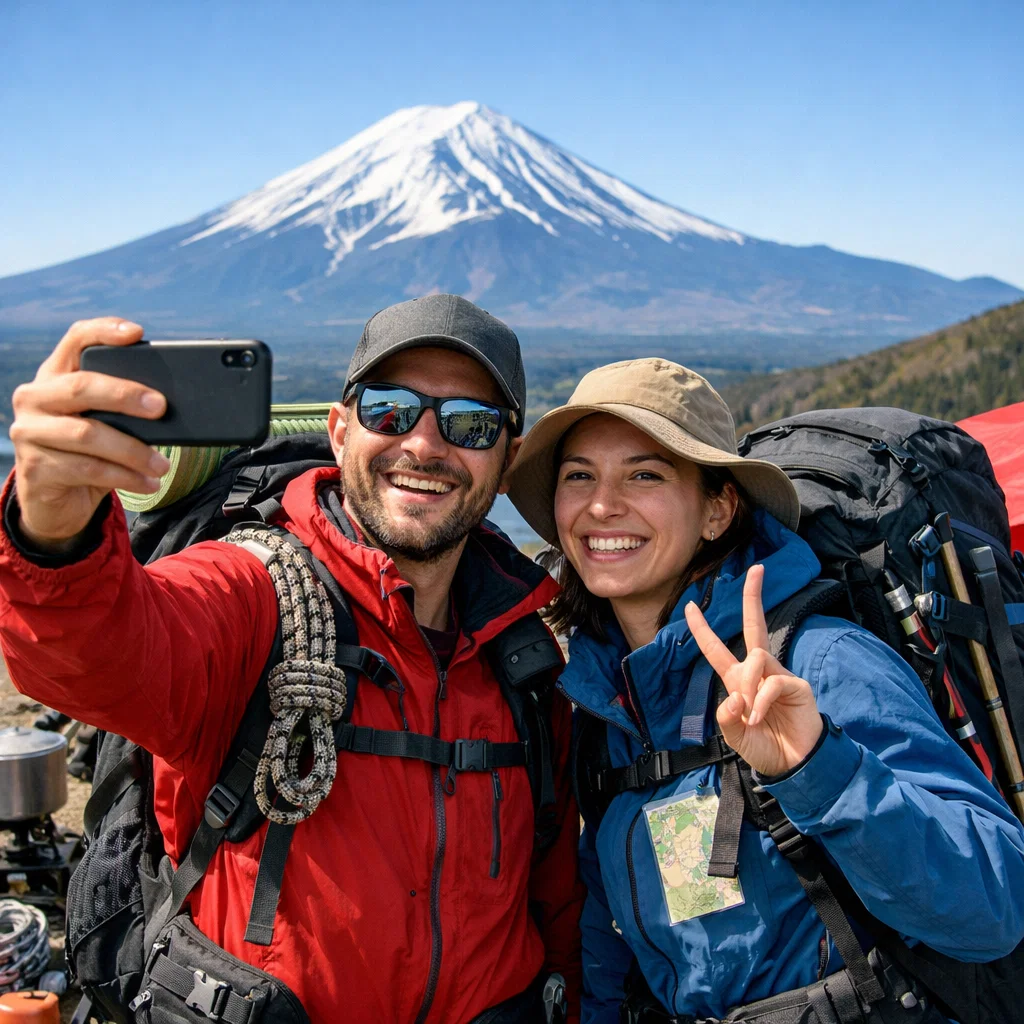
What is Mount Fuji and Why is it Famous?
Mount Fuji is Japan’s highest peak and an iconic symbol of the country, known for its symmetrical beauty and cultural significance. It reaches 3,776 meters and is an active volcano, last erupting in 1707-08. Located on Honshu Island, it is about 100 kilometers southwest of Tokyo, making it a popular destination for travelers and a sacred site for pilgrims. The Fuji-san (Mount Fuji) is recognized as a UNESCO World Heritage Site for its cultural and spiritual importance.
One fascinating historical detail is that the first recorded ascent was in 663 AD by a monk, who climbed the mountain despite harsh conditions to reach enlightenment, setting a spiritual precedent.
How Can You Experience Mount Fuji?
Travelers most commonly experience Mount Fuji by climbing it during the official climbing season from July to early September when the trails are free of snow. There are four major trails: Yoshida, Subashiri, Gotemba, and Fujinomiya, each offering a different experience. The Yoshida Trail is the most popular for beginners, starting from the fifth station and featuring numerous mountain huts.
For those who prefer a less strenuous visit, the Fuji Five Lakes region offers breathtaking views and an array of activities. Kawaguchiko, the most accessible of the five lakes, is renowned for its stunning photographs of Mount Fuji reflecting in its waters. Another option is the Chureito Pagoda in Arakura Sengen Shrine, providing a classic viewpoint of Mount Fuji surrounded by cherry blossoms in spring.
Natural search link: explore Mount Fuji on nipponboutique.fr
What is the Cultural Meaning of Mount Fuji in Japan?
In Japanese culture, Mount Fuji is not just a mountain but a profound icon of spiritual importance. It has long been a source of inspiration in art and literature, as seen in the famous ukiyo-e (woodblock print) series “Thirty-Six Views of Mount Fuji” by Katsushika Hokusai. The mountain represents beauty, endurance, and strength, deeply ingrained in Japanese consciousness.
For many Japanese, climbing Fuji is akin to a pilgrimage—a journey of personal growth and reflection. Every year, an increasing number of climbers, both local and international, undertake this journey, not only to enjoy the sunrise from the summit, known as Goraiko (arrival of light) but also to connect with their inner selves.
What Are Practical Tips for Climbing Mount Fuji?
To successfully climb Mount Fuji, timing and preparation are key. Plan your trip during the official climbing season to ensure weather safety and availability of facilities. Bring adequate clothing for cold weather, as temperatures at the summit can approach freezing even in summer. Staying overnight at one of the mountain huts can help acclimate to the altitude and provides an opportunity to witness the sunrise from the peak.
Ensure that you are physically prepared for the ascent and remember to respect local customs and the environment. Avoiding weekends and Japanese holidays like Obon in mid-August can lead to a less crowded and more enjoyable ascent. For non-climbers, making use of public transportation to reach viewpoints and using local guides can enrich your visit.
Frequently Asked Questions About Mount Fuji
Can you climb Mount Fuji all year round?
No, the official climbing season for Mount Fuji is from July to early September. Climbing outside this season is dangerous due to harsh weather conditions and is not recommended.
Are there any fees to climb Mount Fuji?
While there is no official entrance fee to climb Mount Fuji, a voluntary “climbing fee” of around 1000 yen is encouraged, which goes towards maintaining the paths and facilities.
What gear is essential for climbing Mount Fuji?
Essential gear includes sturdy hiking boots, a headlamp, warm clothing like a windbreaker and thermal layers, sufficient water, food, and cash for mountain hut stays. Trekking poles and a first-aid kit are also recommended.